

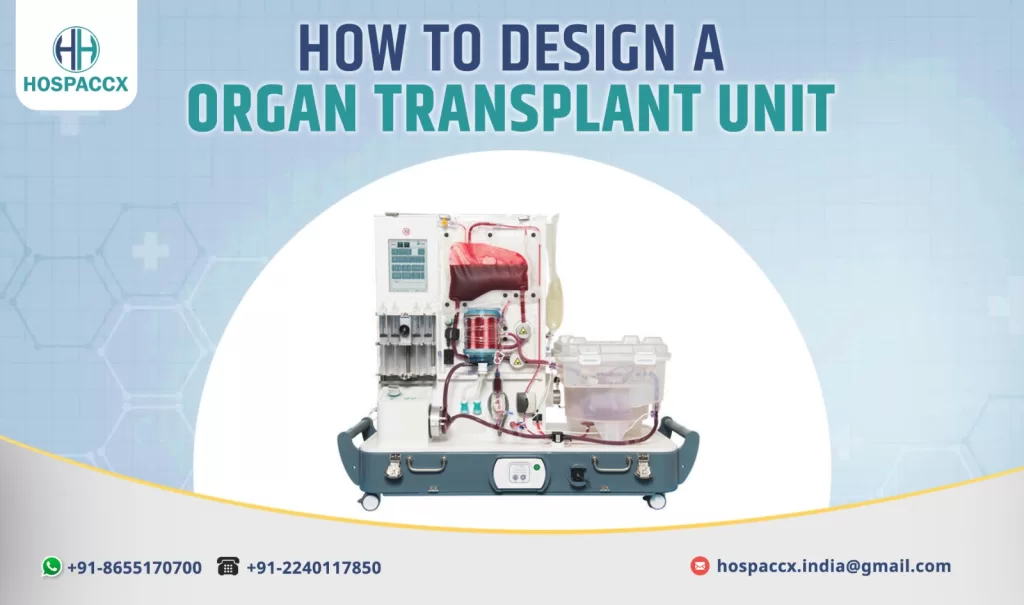
How to Design an Organ Transplant Unit: A Comprehensive Guide
Organ transplantation is one of the most critical and life-saving procedures in modern medicine. The establishment of an Organ Transplant Unit (OTU) is essential for hospitals aiming to provide advanced care for patients with end-stage organ failure. These units are designed to handle complex procedures like kidney, liver, heart, and lung transplants, requiring a multidisciplinary approach, cutting-edge infrastructure, and strict adherence to regulatory standards.
In this blog, we will delve into the key components of an organ transplant unit, the challenges of setting up such a facility, and how Hospaccx Healthcare Consultancy can help transform your vision into reality.
What is an organ transplant unit?
An organ transplant unit is a specialized department in a healthcare facility dedicated to performing organ transplantation surgeries. These units cater to patients suffering from irreversible organ damage and provide preoperative, surgical, and postoperative care. Common organ transplants include:
- Kidney Transplant
- Liver Transplant
- Heart Transplant
- Lung Transplant
- Pancreas Transplant
Organ transplantation not only extends life expectancy but also significantly improves the quality of life for patients suffering from organ failure.
Key Components of an Organ Transplant Unit
- Infrastructure Requirements
Setting up an OTU requires meticulous planning to ensure operational efficiency and patient safety. Key infrastructure components include:
- Modular Operating Theaters: Equipped with laminar airflow systems for infection control.
- Pre- and Post-Operative Wards: Designed for intensive monitoring and care.
- High-Dependency Units (HDU): For patients needing close observation after surgery.
- HEPA-Filtered Environments: To minimize infection risks for immunosuppressed patients.
- Advanced Medical Technology
State-of-the-art equipment is crucial for successful organ transplants, including:
- High-definition imaging systems for presurgical evaluations.
- Robotic surgical systems for minimally invasive procedures.
- ECMO machines for heart and lung support.
- Organ preservation devices for maintaining organ viability.
- Multidisciplinary Team
A successful transplant program requires a team of highly skilled professionals, such as:
- Transplant surgeons specialized in specific organs.
- Anesthesiologists trained in high-risk surgeries.
- Transplant coordinators managing donor-recipient logistics.
- Intensivists, nurses, and dieticians for postoperative care.
- Infection Control Protocols
Infection control is paramount in OTUs due to the immunocompromised state of patients. Measures include:
- Sterile environments with HEPA filtration.
- Adherence to strict hand hygiene and gowning protocols.
- Routine disinfection of equipment and rooms.
- Compliance and Accreditation
Organ transplant units must comply with local and international regulatory standards, such as:
- NOTTO (National Organ and Tissue Transplant Organization) guidelines in India.
- International standards like UNOS and Eurotransplant.
Challenges in Setting Up an Organ Transplant Unit
While the need for OTUs is increasing, several challenges hinder their establishment:
- High capital investment for infrastructure and equipment.
- Shortage of trained transplant professionals.
- Adherence to strict legal and ethical guidelines.
- Organ donor availability and matching logistics.
How Hospaccx Healthcare Consultancy Can Help
Hospaccx Healthcare Consultancy is a trusted partner for healthcare organizations planning to set up organ transplant units. With extensive experience in healthcare consulting, Hospaccx offers comprehensive support in:
- Feasibility Studies
Hospaccx conducts detailed feasibility studies to evaluate the demand, operational costs, and financial viability of the project.
- Infrastructure Design
Our architectural team specializes in designing state-of-the-art facilities that meet international standards and optimize workflow.
- Staff Recruitment and Training
Hospaccx helps recruit skilled professionals and provides training programs to enhance their expertise in transplant care.
- Regulatory Compliance
We ensure your facility adheres to all legal and ethical guidelines for organ transplantation.
- Operational Support
Hospaccx assists in streamlining operational processes, such as donor-recipient coordination, supply chain management, and patient care protocols.
By partnering with Hospaccx, you can build a cutting-edge organ transplant unit that delivers world-class healthcare while maintaining cost efficiency.
Conclusion
An organ transplant unit is a vital healthcare facility that transforms lives by providing life-saving treatments to patients with organ failure. However, establishing such a unit requires meticulous planning, significant investment, and expert guidance. With Hospaccx Healthcare Consultancy, you can overcome these challenges and create a facility that meets the highest standards of care and innovation.
To learn more about how Hospaccx can assist you in setting up an organ transplant unit, visit Hospaccx Healthcare Consultancy.
Related Team Member

Dr.Tarun Katiyar

Pooja Jain Katiyar