

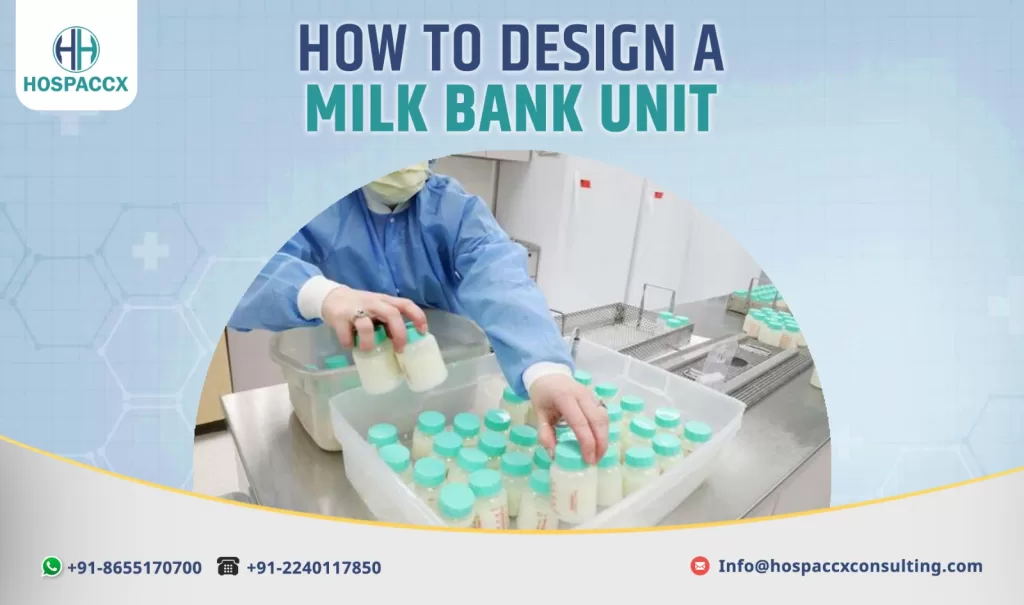
How to Design a Milk Bank Unit Centre: A Comprehensive Guide
A milk bank unit, also known as a human milk bank, is a specialized healthcare facility where donated breast milk is collected, processed, stored, and distributed to infants who cannot be breastfed by their biological mothers. These units play a vital role in providing life-saving nutrition to preterm, low birth weight, or critically ill infants.
Establishing a milk bank unit involves meticulous planning, advanced technology, and adherence to safety protocols. In this blog, we will explore the importance of milk banks, their key components, challenges in setting them up, and how Hospaccx Healthcare Consultancy can assist in creating a world-class facility.
What is a milk bank unit?
A milk bank unit serves as a resource for human breast milk, which is crucial for the growth and immunity of newborns, particularly preterm and critically ill babies. It operates with the following key functions:
- Collection: Acquiring breast milk from healthy lactating mothers willing to donate.
- Processing: Pasteurizing and testing the milk to ensure it is free from harmful bacteria.
- Storage: Preserving milk at controlled temperatures for future use.
- Distribution: Providing pasteurized donor milk to neonatal intensive care units (NICUs), hospitals, or directly to families in need.
Why are milk bank units important?
- Nutrition for Vulnerable Infants: Breast milk is the most complete source of nutrition for newborns, offering essential nutrients and antibodies.
- Reduced Mortality Rates: Donor milk has been shown to reduce the risk of neonatal infections and conditions like necrotizing enterocolitis (NEC).
- Support for Mothers: Mothers who cannot breastfeed due to medical or personal reasons can rely on donor milk to ensure their babies receive optimal nutrition.
- Promoting Breastfeeding Awareness: Milk banks encourage lactating mothers to donate excess milk, fostering a culture of breastfeeding.
Key Components of a Milk Bank Unit
- Infrastructure
A milk bank unit requires a well-designed facility with the following components:
- Milk Collection Room: For donors to express milk in a comfortable and hygienic environment.
- Processing Area: Equipped with pasteurizers, microbiological testing equipment, and sterilizers to process milk.
- Storage Facility: Freezers to store processed milk at temperatures of -20°C or lower.
- Distribution Center: For safe packaging and distribution of milk to hospitals and families.
- Equipment
Critical equipment for a milk bank includes:
- Breast pumps for donors.
- Pasteurization machines for heat treatment.
- Freezers and refrigerators for milk storage.
- Milk analyzers for nutritional testing.
- Sterilization units for ensuring equipment hygiene.
- Staff and Expertise
A milk bank unit requires a multidisciplinary team, including
- Lactation consultants to educate and support donors.
- Microbiologists to conduct milk safety tests.
- Trained nurses and healthcare workers for milk handling.
- Counselors to promote milk donation awareness.
- Regulatory Compliance
Milk banks must adhere to guidelines set by organizations like
- WHO (World Health Organization).
- HMBANA (Human Milk Banking Association of North America).
- National health authorities in respective countries.
- Safety Protocols
- Screening donors for infectious diseases.
- Regular microbiological testing of milk samples.
- Maintaining a cold chain during milk storage and distribution.
Challenges in Setting Up a Milk Bank Unit
- Awareness and Donor Recruitment: Educating mothers about the importance of milk donation.
- Cost of Equipment: High investment in pasteurization and storage technology.
- Logistics: Ensuring a seamless supply chain for milk collection, processing, and distribution.
- Compliance with Standards: Meeting stringent safety and quality control guidelines.
How Hospaccx Healthcare Consultancy Can Help
With years of expertise in healthcare planning and execution, Hospaccx Healthcare Consultancy offers comprehensive support in establishing Milk Bank Units.
- Feasibility Analysis
Hospaccx conducts market research to assess the demand for milk banks in your region and evaluates the financial viability of the project.
- Facility Design and Infrastructure
Our team of architects and healthcare planners designs state-of-the-art Milk Bank Units, ensuring adherence to international safety and hygiene standards.
- Equipment Procurement
We assist in procuring the best-in-class equipment for milk processing, storage, and distribution.
- Staff Training
Hospaccx provides training for healthcare professionals in lactation support, milk handling, and donor management.
- Operational Support
We offer end-to-end operational solutions, including donor outreach programs, process optimization, and regulatory compliance.
By partnering with Hospaccx, you can establish a Milk Bank Unit that provides life-saving nutrition to newborns and sets a benchmark in maternal and child healthcare.
Conclusion
Milk Bank Units are a crucial part of neonatal healthcare, ensuring that every newborn has access to the best possible nutrition. However, setting up such a facility requires careful planning, advanced technology, and expert guidance. With Hospaccx Healthcare Consultancy, you can create a milk bank unit that meets global standards and positively impacts the lives of countless families.
To learn more about setting up a Milk Bank Unit, visit Hospaccx Healthcare Consultancy.
Related Team Member

Dr.Tarun Katiyar

Pooja Jain Katiyar