
SYLHET
Introduction
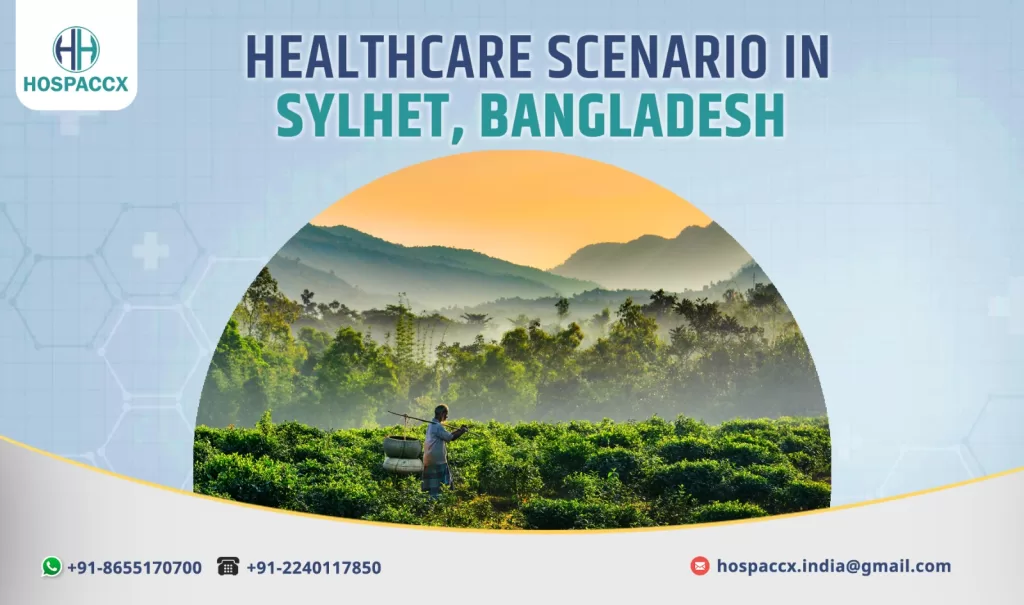
Sylhet, often referred to as the “Land of Two Leaves and a Bud” due to its tea gardens, is one of the most culturally and economically significant cities in Bangladesh. Located in the northeastern region, Sylhet is known for its vibrant expatriate community, religious heritage, and picturesque landscapes. Over the years, the city has experienced significant urbanization, leading to a rising demand for quality healthcare services.
Despite improvements in medical infrastructure, Sylhet still faces challenges such as limited specialized care, overburdened government hospitals, and a growing prevalence of non-communicable diseases (NCDs). This blog explores the healthcare landscape of Sylhet, analyzing its demographics, key challenges, and available medical facilities.
Demographics of Sylhet
| Category | Details |
| Total Population | ~700,000 (urban area) |
| Population Density | ~1,500 people per square kilometer |
| Literacy Rate | ~75% |
| Life Expectancy | ~71 years |
| Infant Mortality Rate (IMR) | 29 per 1,000 live births |
| Prevalence of NCDs | ~57% of total disease burden |
| Common Communicable Diseases | Dengue, tuberculosis, diarrheal diseases |
| Air Pollution Impact | Respiratory diseases affect ~11% of the population |
| Major Economic Activities | Remittance, tea industry, tourism, trade |
Healthcare System Overview in Sylhet
Sylhet has a mixed healthcare system comprising government hospitals, private hospitals, and diagnostic centers. The city serves as a healthcare hub for the Sylhet division, attracting patients from surrounding rural areas and expatriates seeking medical care when visiting Bangladesh.
- Public Healthcare System
- Sylhet MAG Osmani Medical College Hospital (SOMCH) is the largest government hospital in the region, providing tertiary healthcare services.
- Several upazila health complexes and community clinics offer basic medical services in rural areas.
- Government hospitals often suffer from overcrowding, lack of specialized equipment, and staff shortages.
- Private Healthcare System
- Sylhet has seen a rise in private hospitals and diagnostic centers offering specialized treatment in cardiology, orthopedics, nephrology, and maternity care.
- Many expatriates and wealthy residents prefer private hospitals for better service and shorter wait times.
Key Challenges in Sylhet’s Healthcare System
- Limited Specialized Care: There is a shortage of advanced medical facilities for oncology, neurology, and critical care.
- Overcrowded Government Hospitals: Sylhet MAG Osmani Medical College Hospital is overburdened with patients from across the division.
- Shortage of Skilled Medical Professionals: Many doctors and nurses migrate abroad, leading to staffing shortages.
- High Dependence on Dhaka: Patients often travel to Dhaka for complex surgeries and advanced treatments.
- Inconsistent Healthcare Quality in Rural Areas: Remote areas lack well-equipped hospitals and trained healthcare workers.
List of Government and Private Hospitals in Sylhet
Government Hospitals
| Government Hospitals |
| Sylhet MAG Osmani Medical College Hospital (SOMCH) |
| Sylhet Sadar Hospital |
| Shahid Shamsuddin Ahmed District Hospital |
| Sylhet 250-Bed TB Hospital |
| Sylhet BNSB Eye Hospital |
| Sylhet Infectious Disease Hospital |
| Sylhet Mental Health Hospital |
| Private Hospitals |
| Mount Adora Hospital |
| Noorjahan Hospital |
| Al Haramain Hospital |
| IBN Sina Hospital & Diagnostic Center |
| Oasis Hospital & Cardiac Center |
| Popular Medical College Hospital |
| Jalalabad Ragib-Rabeya Medical College Hospital |
| United Medical College Hospital |
| Sylhet Women’s Medical College Hospital |
| Medinova Medical Services |
Conclusion
Sylhet’s healthcare sector has improved over the years with new private hospitals, better diagnostic centers, and increased access to medical care. However, government hospitals remain overburdened, and there is a shortage of specialized treatment facilities. Addressing these issues through investments in medical education, better infrastructure, and policy reforms can significantly enhance healthcare quality in Sylhet.