
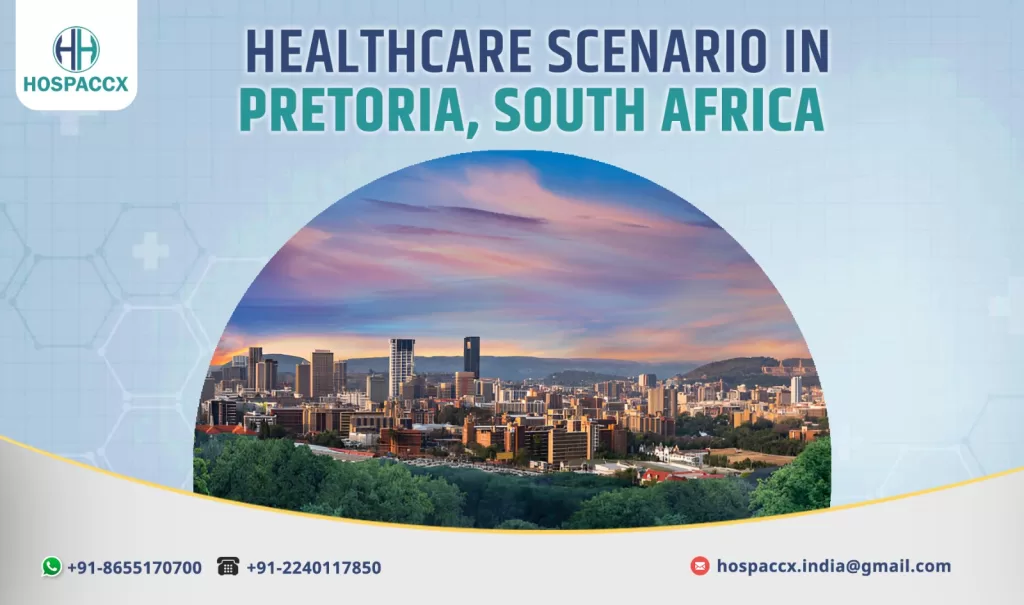
PRETORIA
As the administrative capital of South Africa, Pretoria offers a well-established healthcare system with a dual structure, comprising both public and private sectors. While the city has some of the country’s top medical facilities, disparities in access and quality of care remain a concern.
Public Healthcare in Pretoria
Pretoria is home to several major public hospitals, including the Steve Biko Academic Hospital, a key tertiary care facility that serves as a teaching hospital for medical students and provides specialized services. The public healthcare sector in Pretoria is subsidized by the government, ensuring affordability for the majority of the population.
Key Features of Public Healthcare:
- Tertiary and Specialized Services – Public hospitals offer emergency care, pediatrics, neonatal care, and chronic disease management.
- Long Waiting Times—Due to high patient demand, public hospitals often struggle with overcrowding and extended waiting periods for specialist appointments.
- Resource Constraints—Limited staffing, medicine shortages, and outdated equipment affect service delivery.
Private Healthcare in Pretoria
For those who can afford it, Pretoria boasts a high-quality private healthcare sector, with modern hospitals and specialized medical centers. Private healthcare is funded primarily through medical insurance and out-of-pocket payments.
Advantages of Private Healthcare:
- Advanced Medical Technology – Access to state-of-the-art diagnostic tools, including MRI, CT scans, and robotic-assisted surgeries.
- Shorter Waiting Periods—Faster consultations and treatment compared to public hospitals.
- Specialized Medical Professionals—The private sector attracts top doctors and medical experts due to better working conditions and salaries.
Despite these benefits, private healthcare remains costly, making it inaccessible for many residents.
Primary Health Care (PHC) in Pretoria
The Gauteng Department of Health oversees primary healthcare clinics and community health centers, which provide free or low-cost medical services, particularly in underserved areas.
PHC Initiatives in Pretoria:
- Expanding Community Clinics – Increasing the number of primary care facilities to improve access to preventive care.
- Community Outreach Programs—Ward-based outreach teams and partnerships with NGOs work to bring healthcare services closer to local communities.
Challenges in Pretoria’s Healthcare System
- Healthcare Inequity—The divide between public and private healthcare leads to unequal access to quality medical care.
- Resource Shortages—Government hospitals and clinics struggle with limited funding, outdated infrastructure, and staff shortages.
Trends and Healthcare Reforms in Pretoria
- National Health Insurance (NHI): The government is implementing the NHI policy to integrate public and private healthcare services, aiming for universal health coverage and reduced disparities.
- PHC Re-engineering: Initiatives like ward-based outreach teams and school health programs are being expanded to strengthen primary healthcare services.
List of Hospitals and Diagnostic Centers—
| Government Hospitals |
| Steve Biko Academic Hospital |
| Tshwane District Hospital |
| Tshwane Rehabilitation Hospital |
| Westfort Hospital |
| Private Hospitals |
| Life Faerie Glen Hospital |
| Netcare Pretoria East Hospital |
| Zuid-Afrikaans Hospital |
| Life Groenkloof Hospital |
| Life Wilgers Hospital |
| Mediclinic Muelmed Hospital |
| Life Eugene Marais Hospital |
| Advanced Groenkloof Day Hospital |
| Louis Pasteur Private Hospital |
| Netcare Jakaranda Hospital |
| Netcare Moot General Hospital |
| Mediclinic Medforum Hospital |
| Pretoria North Medical Centre |
| Diagnostic Centres |
| SEMLI Radiology |
| Peermed Health Centre |
| Hatmed Medical Centre |
| Lancet Lab |
| Malik pathology lab |
| Medicross Medical Centre |
| Patricks diagnostics |
| Life Medical Centre |
| Lifelab Medical Practice |
| Thermal Health Centre |
| Paragon Medical Centre |
| Netcare Medicross |