
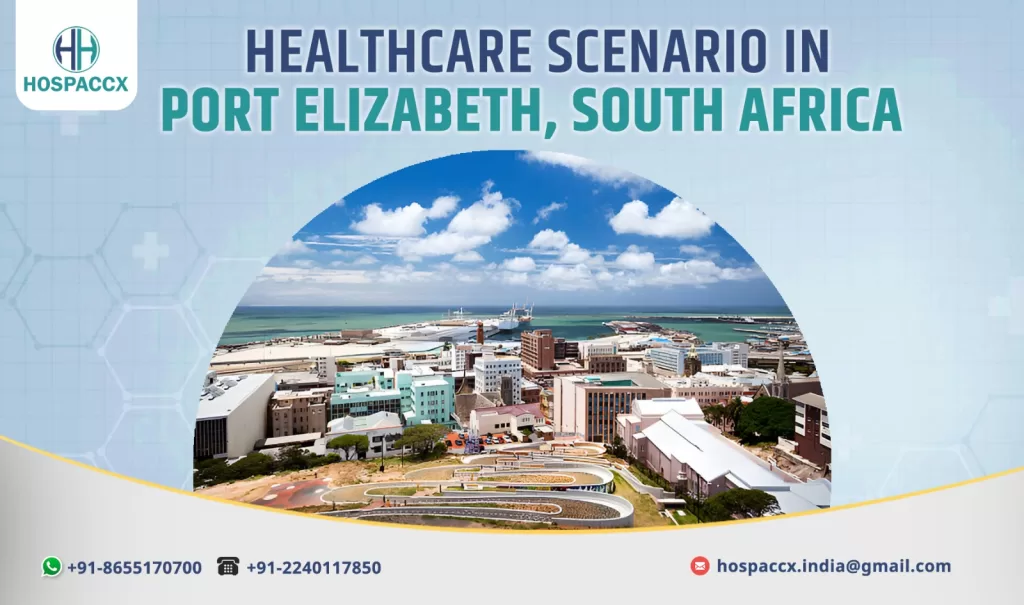
PORT ELIZABETH
Port Elizabeth, now officially known as Gqeberha, is one of the major cities in South Africa’s Eastern Cape province. The city’s healthcare system is characterized by a significant divide between public and private sectors, with challenges such as resource shortages and inequitable access to care.
Public Healthcare in Port Elizabeth
Port Elizabeth is home to key public hospitals, including
- Port Elizabeth Provincial Hospital—A large tertiary teaching hospital forming part of the Port Elizabeth Hospital Complex.
- Dora Nginza Hospital – Focuses on maternal and pediatric care.
- Livingstone Hospital—Specializes in trauma care and has an oncology and ophthalmology department.
Despite these facilities, public healthcare in the city is under severe strain due to:
- Underfunding and understaffing, resulting in long waiting times and overburdened facilities.
- Critical case prioritization, where hospitals are forced to focus on life-threatening cases due to limited resources.
- COVID-19 impact, which exposed systemic weaknesses, including staff shortages and infrastructure gaps.
Private Healthcare in Port Elizabeth
The city also has several private hospitals and clinics, including those operated by Life Healthcare, providing specialized medical and surgical services.
Advantages of Private Healthcare:
- High-quality facilities with modern equipment.
- Shorter waiting times and better doctor-to-patient ratios.
- Advanced diagnostics and specialized treatments.
However, these services are expensive and accessible mainly to those with private insurance or the financial means to pay out-of-pocket.
Primary Health Care (PHC) in Port Elizabeth
The Eastern Cape province has a network of primary health care (PHC) clinics and community health centers aimed at providing free or low-cost healthcare. However, rural areas often face accessibility issues, and clinics may suffer from medicine shortages and infrastructure challenges.
Community Healthcare Efforts:
- Ward-based outreach teams work to expand healthcare access.
- NGO partnerships support efforts in HIV/AIDS treatment, maternal health, and chronic disease management.
- Mobile clinics have been introduced in some areas to reach remote communities.
Challenges in Port Elizabeth’s Healthcare System
- Healthcare Inequity—The gap between public and private healthcare is significant, leading to disparities in service quality and accessibility.
- Resource Shortages – Public hospitals struggle with funding constraints, understaffing, and outdated equipment.
- Limited Rural Access—Many outlying communities lack sufficient healthcare infrastructure and rely on overburdened urban hospitals.
Trends and Healthcare Reforms
- National Health Insurance (NHI) – The planned implementation of NHI aims to integrate public and private healthcare services, making healthcare more equitable for all citizens.
- Public-Private Partnerships – Efforts like Volkswagen’s construction of a COVID-19 field clinic highlight the role of corporate partnerships in strengthening the healthcare system.
List of Hospitals and Diagnostic centres-
| Government Hospitals |
| Port Elizabeth Provincial Hospital |
| Livingstone Hospital |
| Port Elizabeth Provincial Hospital – Warehouse Centre |
| Empilweni T B Hospital |
| Livingstone Hospital – Surgical |
| Uitenhage Provincial Hospital |
| Elizabeth Donkin Hospital |
| Private Hospitals |
| Life Mercantile Hospital |
| Life St. George Hospital |
| Edge Day Hospital |
| Life Hunterscraig Private Hospital |
| Netcare Cuyler Hospital |
| Bay Medical Centre |
| Newton Park Private (Pty) LTD T/a Westways Private Hospital |
| Diagnostic Centre |
| Meta Clinic |
| Klinidoc Mill park Medical Centre |
| Greenways medical centre |
| EPSWI |
| Intercare Summerstand |
| Medicross Medical Centre |
| Pathcare Depot & Cytogenetics Lab |
| Bayradiology |
| East Cape X Ray Cc |