
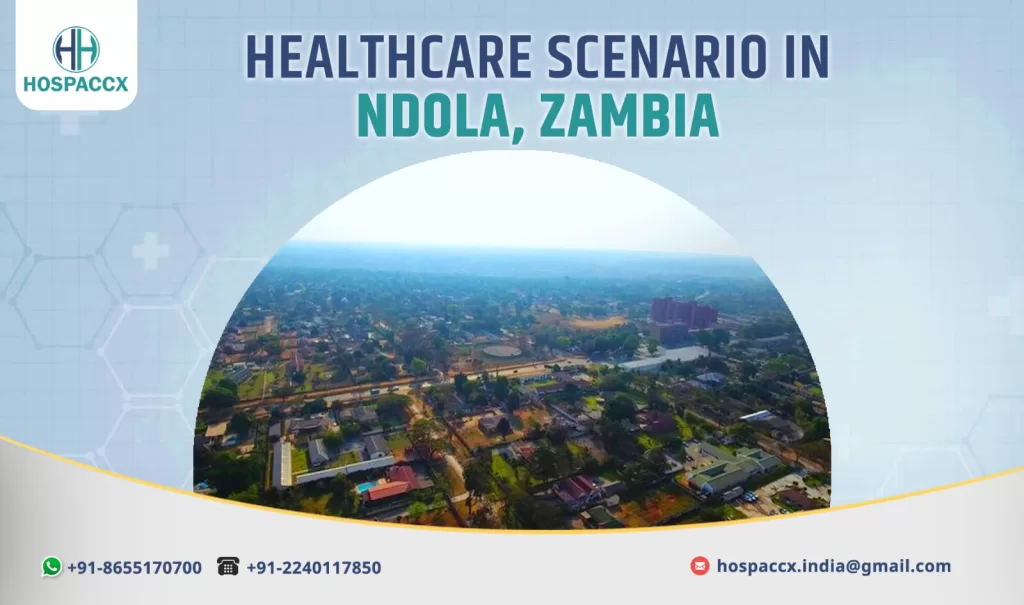
NDOLA
Introduction
Ndola, the third-largest city in Zambia and the commercial hub of the Copperbelt Province, plays a vital role in the country’s healthcare landscape. As an economic and industrial center, the city experiences rapid urbanization, which has increased the demand for quality medical services.
Ndola has a mix of government hospitals, private healthcare institutions, and diagnostic centers, catering to a diverse population. While the public healthcare system provides essential services, it faces challenges such as overcrowding, staff shortages, and limited medical equipment. The private sector, though well-equipped, remains expensive for many residents.
This blog provides an in-depth look at Ndola’s healthcare system, including demographics, challenges, and a categorized list of medical facilities available in the city.
Demographics of Ndola
| Category | Details |
| Total Population | ~600,000 (as of 2023) |
| Population Density | ~1,000 people per square kilometer |
| Literacy Rate | ~85% |
| Life Expectancy | ~64 years |
| Infant Mortality Rate (IMR) | ~35 per 1,000 live births |
| Maternal Mortality Rate (MMR) | ~230 per 100,000 live births |
| HIV/AIDS Prevalence Rate | ~11% |
| Malaria Incidence | High (~400 cases per 1,000 population) |
| Access to Clean Water | ~80% of urban residents |
| Major Economic Activities | Mining, trade, manufacturing, agriculture |
Healthcare System Overview in Ndola
Ndola has a structured healthcare system, with government-run hospitals, private medical centers, and specialized diagnostic facilities.
- Public Healthcare System
- The city has several government hospitals, providing affordable and essential medical services.
- Ndola Teaching Hospital, one of Zambia’s largest public hospitals, serves as a referral center for the Copperbelt Province.
- Public hospitals focus on general healthcare, maternal services, and emergency care, but long wait times and resource shortages are common.
- Private Healthcare Sector
- Private hospitals offer specialized medical services, shorter waiting times, and modern facilities.
- Some well-known private hospitals include Coptic Hospital and Fairview Hospital.
- Costs at private facilities are significantly higher than at government hospitals, making them less accessible to lower-income residents.
- Diagnostic and Specialized Centers
- Ndola has several diagnostic centers, offering radiology, pathology, and laboratory services.
- These facilities support both public and private hospitals by providing critical diagnostic tests for diseases such as malaria, tuberculosis, and cancer.
Key Challenges in Ndola’s Healthcare System
Despite progress, Ndola’s healthcare sector faces several challenges, including:
- Overcrowding in Public Hospitals—Government hospitals experience high patient loads, leading to long waiting times and overstretched medical staff.
- Shortage of Medical Professionals—There is a limited number of doctors, nurses, and specialists, affecting healthcare quality.
- Inadequate Medical Equipment—Many public hospitals lack modern diagnostic tools and surgical facilities, delaying treatment.
- High Disease Burden—Malaria, HIV/AIDS, and non-communicable diseases (NCDs) continue to be major health concerns.
- Healthcare Accessibility—While urban areas have better facilities, rural populations still struggle with access to quality medical care.
List of Hospitals and Diagnostic Centers in Ndola
Government Hospitals in Ndola
| Hospital Name |
| Ndola Teaching Hospital |
| Arthur Davison Children’s Hospital |
| Twapia Clinic |
| Lubuto Clinic |
| Chipulukusu Health Center |
| Twapia First Level Hospital |
| Mushili Health Center |
| Pamodzi Health Center |
| Ndeke Clinic |
| Kansenshi Clinic |
Private Hospitals in Ndola
| Hospital Name |
| Coptic Hospital Ndola |
| Fairview Hospital |
| Hilltop Hospital |
| Mary Begg Community Clinic |
| Ndola Trust Hospital |
| Providence Healthcare Center |
| Ndola Private Medical Center |
| Corporate Health Services Clinic |
Diagnostic and Specialized Centers in Ndola
| Diagnostic Center Name |
| Copperbelt Imaging and Diagnostic Center |
| Supreme Medical Diagnostics |
| Ndola MRI & CT Scan Center |
| Medland Laboratory Services |
| PathCare Zambia |
| Ndola X-ray and Ultrasound Clinic |
| Medical Laboratory and Research Clinic |
| St. John’s Diagnostic Clinic |
Conclusion
Ndola’s healthcare sector is a crucial part of Zambia’s medical system, catering to thousands of patients from across the Copperbelt Province. While public hospitals provide essential services, they are often overburdened and under-resourced. The private sector has stepped in to offer high-quality medical care, but affordability remains a concern for many residents.
To improve healthcare services in Ndola, government initiatives should focus on increasing funding for medical infrastructure, training more healthcare professionals, and expanding rural healthcare access. By addressing these challenges, Ndola can strengthen its healthcare system and provide better medical care for all its residents.