
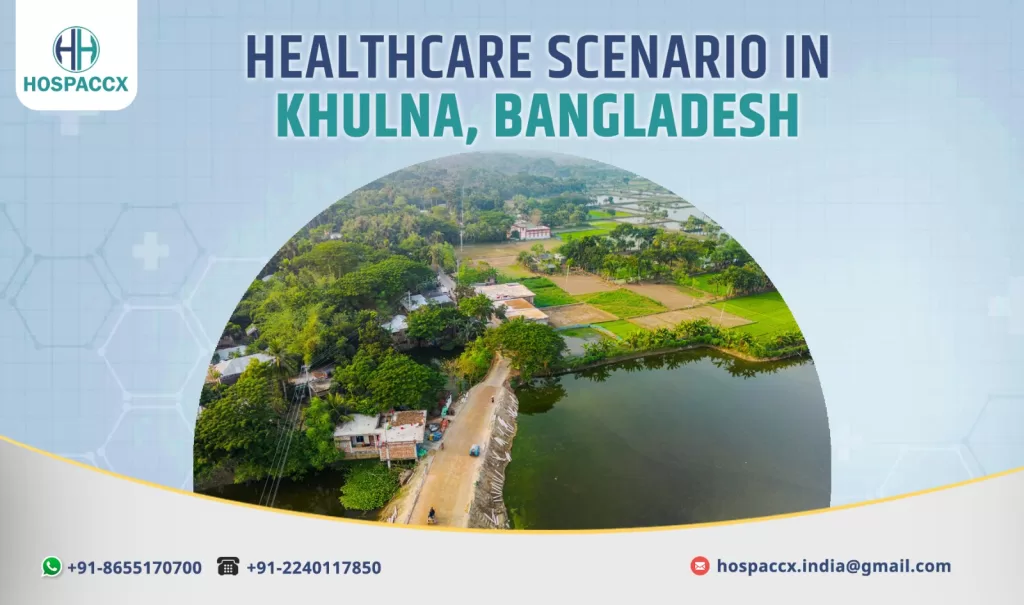
KHULNA
Introduction
Khulna, the third-largest city in Bangladesh, serves as a crucial economic and administrative hub in the southwestern part of the country. Known for its proximity to the Sundarbans and its strong industrial base, Khulna has seen steady population growth and urban expansion in recent years. With this growth comes an increasing demand for quality healthcare services. While the city has made significant progress in improving healthcare access, challenges such as inadequate infrastructure, a shortage of specialized medical professionals, and a growing burden of both communicable and non-communicable diseases persist. This blog delves into Khulna’s healthcare system, its strengths, weaknesses, and the way forward.
Demographics of Khulna
| Category | Details |
| Total Population | ~1.5 million (urban area) |
| Population Density | ~1,700 people per square kilometer |
| Literacy Rate | ~75% |
| Life Expectancy | ~72 years |
| Infant Mortality Rate (IMR) | 28 per 1,000 live births |
| Prevalence of NCDs | ~60% of total disease burden |
| Common Communicable Diseases | Tuberculosis, dengue, diarrheal diseases |
| Air Pollution Impact | Respiratory diseases affect ~12% of the population |
| Major Economic Activities | Manufacturing, agriculture, port trade |
Healthcare System Overview in Khulna
Khulna’s healthcare system is a mix of public and private sector facilities. The government plays a significant role in providing affordable medical care through hospitals and community health centers. However, private hospitals and diagnostic centers have expanded in recent years, offering specialized services that are often lacking in government facilities.
- Public Healthcare System
- The government operates multiple hospitals, including Khulna Medical College Hospital, which serves as the primary referral center for the region.
- Several upazila health complexes and community clinics cater to rural and semi-urban populations.
- Public hospitals struggle with overcrowding, limited resources, and outdated medical equipment.
- Private Healthcare System
- A growing number of private hospitals, clinics, and diagnostic centers provide advanced treatments, including cardiology, oncology, and nephrology services.
- While private hospitals offer better service quality, they are often unaffordable for lower-income groups.
- Specialized Healthcare Services
- Khulna has a rising demand for specialized medical care, particularly in cardiology, neurology, and oncology.
- Dialysis centers and cancer treatment facilities remain limited.
- Telemedicine services are emerging as a solution to bridge the gap between rural patients and specialists.
Key Healthcare Challenges in Khulna
- Insufficient Healthcare Infrastructure
- Government hospitals are often overcrowded, with a shortage of beds and essential medical supplies.
- Advanced medical equipment is scarce in public hospitals, leading to referrals to Dhaka for critical cases.
- Shortage of Medical Professionals
- There is a significant gap in the doctor-to-patient ratio, with many specialized physicians concentrated in Dhaka and Chattogram.
- Rural areas surrounding Khulna lack trained healthcare personnel, leading to delays in treatment.
- Burden of Non-Communicable Diseases (NCDs)
- Diseases such as diabetes, hypertension, and cardiovascular disorders account for nearly 60% of hospital admissions.
- Lifestyle changes, poor dietary habits, and environmental factors contribute to the rising NCD burden.
- Prevalence of Communicable Diseases
- Dengue, tuberculosis, and diarrheal diseases remain prevalent, particularly in densely populated urban areas.
- Poor waste management and inadequate sanitation contribute to frequent disease outbreaks.
- High Out-of-Pocket Healthcare Costs
- Many patients struggle with high medical expenses, as health insurance coverage is limited in Bangladesh.
- The cost of diagnostic tests and specialist consultations in private hospitals can be prohibitively high.
Major Hospitals and Diagnostic Centers in Khulna
| Government Hospitals- |
| Khulna Medical College and Hospital |
| Khulna Shishu Hospital |
| Shaheed Sheikh Abu Naser Specialized Hospital |
| General Hospital |
| CMH (Combined Military Hospital) Khulna |
| Khulna BNSB Eye Hospital |
| Khulna Pongu And General Hospital |
| AMIRA BANU BEGUM Maternity Hospital |
| Cure Home General Hospital |
| Binodhini Smrity Hospital |
| Zahurul Haque Hospital |
| Private Hospitals- |
| Ad-Din Akij Medical College and Hospital |
| Islami Bank Hospital |
| Khulna City Medical College Hospital |
| Khulna Healthcare Hospital |
| Prince Hospital Khulna |
| Nargis Memorial Hospital |
| Good Health Clinic, Diagnostic & Consultancy |
| Sami Hospital |
| Specialized Hospital |
| Surokkha Hospital & Diagnostic |
| Fatimah Hospital and Diagnostic Centre Khulna |
| Khulna Al-Shefa Hospital |
| Jinnat Hospital |
| Zohra Memorial Hospital |
| Khulna Life Care Hospital |
| Rasheda Memorial Hospital |
| Gazi Medical College Hospital |
| ORTHOCARE & GENERAL HOSPITAL |
| M.R. Central Hospital |
| Fresh Health Private Hospital |
Conclusion
Khulna’s healthcare sector has witnessed growth in recent years, with the expansion of both public and private medical services. However, the city still faces significant challenges, including a lack of specialized medical professionals, outdated government hospital infrastructure, and rising healthcare costs. Addressing these issues requires greater government investment, improved training for healthcare workers, and increased collaboration between public and private sectors. With strategic reforms, Khulna can emerge as a leading healthcare hub for the southwestern region of Bangladesh, ensuring better medical services for its growing population.