
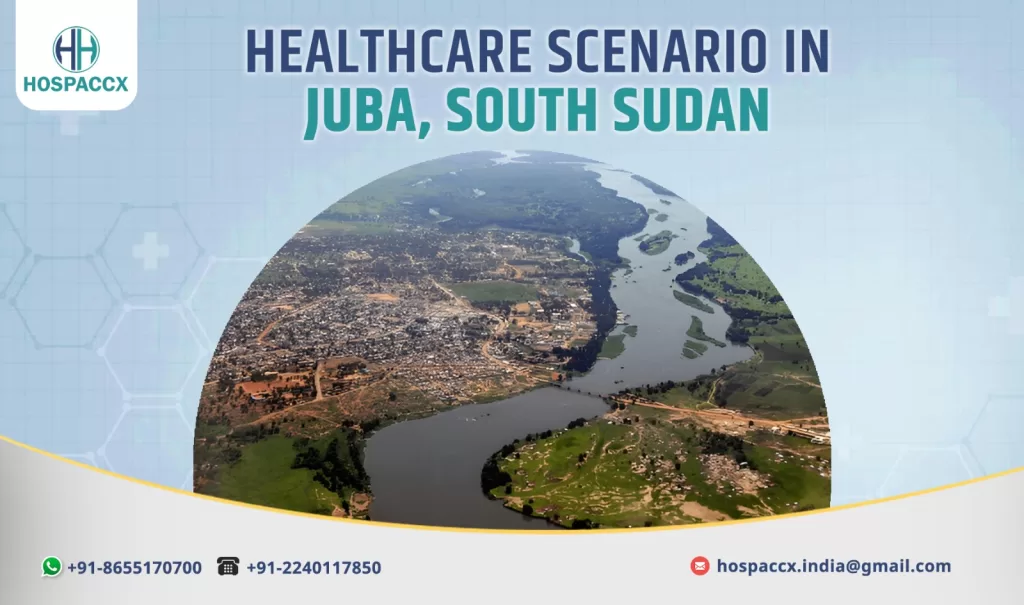
JUBA
Juba, the capital and largest city of South Sudan, is strategically situated on the White Nile River, serving as the administrative and commercial hub of the nation. The city’s healthcare system is a mix of public and private facilities, with Juba Teaching Hospital being the primary referral institution. However, healthcare access remains limited due to inadequate infrastructure, shortages of medical personnel, and high disease burden. The city continues to grapple with healthcare challenges, including infectious disease outbreaks and maternal and child health concerns, highlighting the urgent need for improved healthcare infrastructure and increased investment in medical services.
Demographics
- Population: As of 2025, Juba’s estimated population is approximately 500,000, reflecting a steady annual growth rate of around 4.38% since 2024.
- Area: The city encompasses approximately 52 square kilometers.
- Population Density: This translates to a population density of approximately 9,615 persons per square kilometer.
List of Hospitals
Public Hospitals:
- Juba Teaching Hospital: Established in 1975, this 512-bed government-run institution serves as the primary referral hospital for the nation, offering services such as emergency care, obstetrics, surgery, and vaccinations.
- Juba Military Referral Hospital: Provides medical services primarily to military personnel and their families.
- Al Sabah Children’s Hospital: Specializes in pediatric care, addressing the medical needs of children in the region.
Private Hospitals:
- AMI South Sudan Clinic: Operates a 13-bed hybrid hospital/outpatient clinic offering comprehensive care, including emergency medicine, general medicine, obstetrics, child health, and radiology services.
- AmbuMed Hospital: A 100-bed modern healthcare facility located in Gudele 1, providing services such as emergency care, intensive care, maternity services, and more.
- Gudele General Hospital: A full-service general hospital offering services ranging from emergency care to advanced diagnostic testing and surgical procedures.
- Care Plus International Medical Centre: Offers general medicine, radiology, and surgical services, located on Airport Road, Tong Piny.
- Gurei Medical Center (GMC): A private hospital providing comprehensive family-centered health services, established in December 2022.
- St. Luke International Medical Center Juba: Established in 2007, St. Luke International Medical Center is a private medical facility in Juba aimed at improving healthcare service delivery in South Sudan.
- Lane General Medical Center: Lane General Medical Center is a private medical facility in Juba, South Sudan, dedicated to providing accessible healthcare services.
List of Medical Institutions
- University of Juba, School of Medicine
Established in 1978, the School of Medicine at the University of Juba is one of the founding schools of the university. It offers a six-year Bachelor of Medicine and Bachelor of Surgery (MBBS) program, modeled after the curriculum of the University of Khartoum.
- South University of Medicine, Science and Technology (SUMST)
SUMST offers a six-year Bachelor of Medicine and Bachelor of Surgery (MBBS) program. The university emphasizes a comprehensive medical education that integrates theoretical knowledge with extensive clinical experience.
- College of Physicians and Surgeons of South Sudan (CPS)
Established by a resolution of the Council of Ministers in 2015, CPS is an autonomous institution of higher medical learning. It offers various programs, including Master of Medicine (MMED) training for medical doctors, an Associate Clinicians Program, an Anaesthetic Nursing Program, and a Health Personnel Education (HPE)-Tutorship program.
Major Challenges in the Healthcare Sector
- Inadequate Funding: Insufficient government investment limits the expansion and improvement of health services.
- Infrastructure Deficiencies: Many health facilities lack basic amenities, hindering effective service delivery.
- Workforce Shortages: The scarcity of trained health professionals compromises the quality and availability of care.
- High Disease Burden: Prevalence of preventable diseases contributes to elevated morbidity and mortality rates.
- Security Concerns: Attacks on healthcare workers and facilities impede service provision and deter workforce retention.
Conclusion
Juba’s healthcare sector faces multifaceted challenges, including underfunding, infrastructural inadequacies, workforce shortages, and a high burden of preventable diseases