

INRODUCTION –
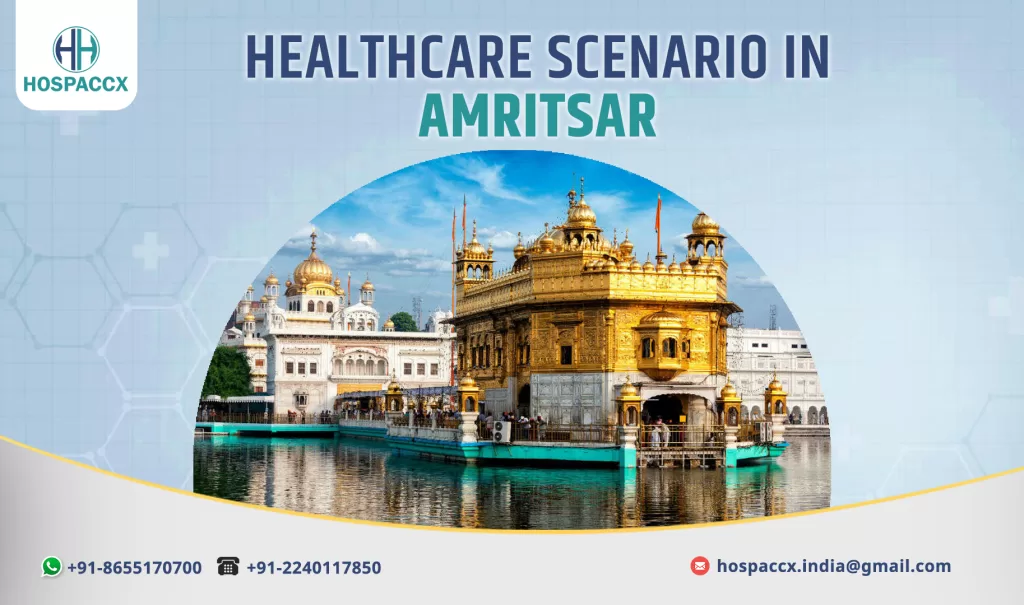
Amritsar, the spiritual and cultural heart of Punjab, is one of India’s most historic and vibrant cities. Known for the iconic Golden Temple, it attracts millions of visitors every year. The city also holds historical significance with sites like Jallianwala Bagh and Wagah Border, making it a key center for tourism, trade, and cultural heritage. Beyond its historical and religious importance, Amritsar is a growing urban hub with a strong agricultural, textile, and food processing industry. The city is also a major center for healthcare and education in Punjab, with multiple hospitals, medical colleges, and research institutions catering to both local and international patients. With ongoing infrastructural developments, Amritsar continues to expand as a modern yet deeply rooted city in Punjab’s rich heritage.
DEMOGRAPHICS –
Population | 31,88,480 (Estimated 2025) |
Density /km² | 975 persons / km²
|
Birth Rate | 14.3 births /1000 people
|
Life expectancy | 72.6 yrs |
Sex Ratio | 918 females per 1,000 males |
Literacy Rate | 76.27% |
HEALTHCARE INFRASTRUCTURE IN AMRITSAR ( 2025)
Private Hospitals and Nursing homes: 149 Public Hospitals – 10 CHCs – 4 PHCs – 37 Subcentres – 179 | Government Medical Colleges – 1
Private Medical Colleges – 1 |
Registered Doctors Allopathy – 5,300
Doctors Population Ratio – 1:703
| Total Number beds available in Public and Private Hospitals: 3146
|
HEALTHCARE SCENARIO IN AMRITSAR
Amritsar has a developing healthcare system with a combination of government and private healthcare providers catering to a growing population. The city has a significant number of hospitals, nursing homes, and diagnostic centers, offering a range of medical services from primary care to specialized treatments. However, the distribution of healthcare facilities is uneven, with urban areas having better access compared to rural regions. With thousands of registered doctors, Amritsar has a relatively strong medical workforce, but there is still a need for more specialized professionals in areas like cardiology, oncology, and critical care. The number of hospital beds is increasing, yet demand continues to outpace supply, particularly in public healthcare institutions. Investment in healthcare infrastructure, digital health solutions, and emergency medical services presents a strong opportunity for growth. Expanding telemedicine, diagnostic facilities, and affordable specialty care can help bridge the existing healthcare gaps, ensuring better accessibility and quality treatment for all residents.
LIST OF MAJOR HOSPITALS IN AMRITSAR
GOVERNMENT HOSPITALS IN AMRITSAR (As of 2025)
| Hospital Name | Number of Beds |
| Guru Nanak Dev Hospital | 800 |
| Government Medical College and Hospital | 700 |
| Civil Hospital Amritsar | 300 |
| ESI Hospital | 200 |
| Chheharta Government Hospital | 150 |
| Ajnala Civil Hospital | 120 |
| Jandiala Guru Government Hospital | 100 |
| State TB Training and Demonstration Centre | 100 |
PRIVATE HOSPITALS IN AMRITSAR
| Hospital Name | Number of Beds |
| Fortis Hospital | 173 |
| EMC Super Speciality Hospital | 300 |
| Amandeep Hospital | 500 |
| K.D. Hospital | 80 |
| Sareen Hospital | 40 |
| Apollo Spectra Hospitals | 15 |
| Livasa Hospital | 50 |
| Neelkanth Hospital | 100 |
| Dr. Karam Singh Memorial Multispeciality Hospital | 1oo |
| Uppal Neuro Hospital | 105 |
MEDICAL COLLEGES IN AMRITSAR
| College Name | Number of Beds |
| Government Medical College, Amritsar | 960 |
| Sri Guru Ram Das Institute of Medical Sciences and Research | 765 |
DIAGNOSTIC CENTRES IN AMRITSAR
| Redcliffe Labs |
| SRL Labs – Amritsar |
| Thyrocare Amritsar |
| Nijjar scan & Diagnostic centre |
| Dr. Lal PathLabs |
| Bhakna Lab & Diagnostic Centre |
| GS Diagnostic Centre |
| New Asia Diagnostics |
CONCLUSION
Amritsar’s healthcare system is growing, but gaps in specialized care, emergency services, and advanced medical infrastructure remain. While the city has a strong network of hospitals and medical professionals, rising healthcare demands and an increasing population highlight the need for investment in multi-specialty hospitals, diagnostic centers, and telemedicine solutions.Expanding affordable healthcare, critical care units, and modern medical technologies can enhance accessibility and quality of care, while also creating sustainable business opportunities. With the right investments, Amritsar can transform into a regional hub for high-quality, patient-centric healthcare, benefiting both investors and the community.
REFERENCES –