
Benghazi
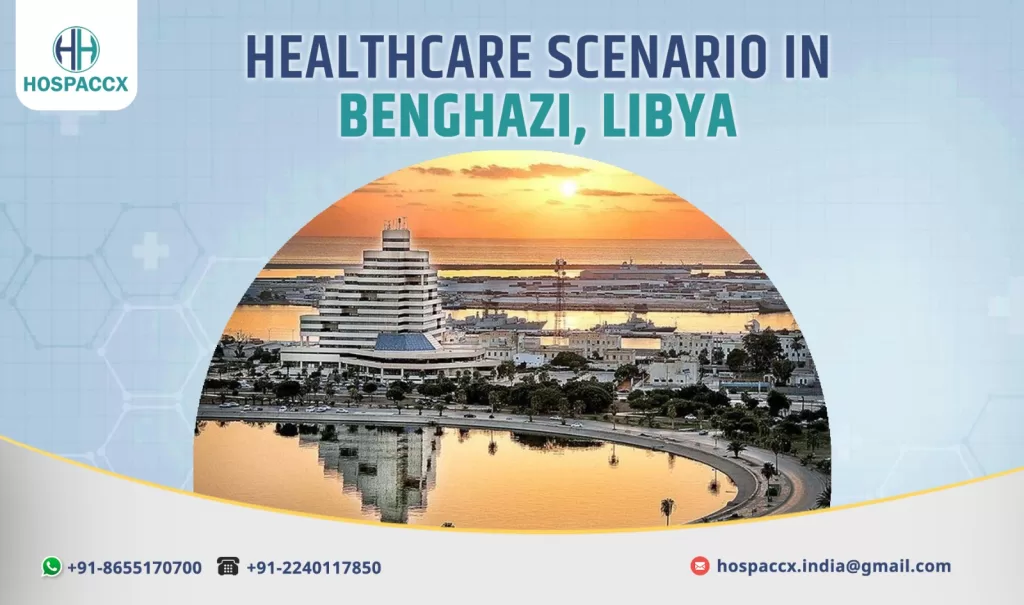
Benghazi is the second-largest city in Libya and a major economic and cultural hub. Located in the northeastern part of the country, it serves as the capital of the Cyrenaica region. Historically, Benghazi has been an important trade center due to its strategic position on the Mediterranean coast. The city has a rich past, influenced by Greek, Roman, Arab, Ottoman, and Italian rule. It was also a key battleground during Libya’s civil conflicts. Today, Benghazi is known for its port, universities, and historic sites, despite challenges due to political instability and war damage.
Healthcare Scenario
The protracted conflict in Libya has significantly disrupted healthcare services in Benghazi. Infrastructure damage and security concerns have limited access to care, while shortages of essential medications and medical equipment have hindered treatment capabilities. The shortage of skilled healthcare professionals further exacerbates the situation, leading to a compromised healthcare delivery system.
Healthcare Infrastructure
Benghazi’s healthcare infrastructure has been severely impacted by ongoing conflicts. Of the city’s seven major hospitals, only three remain operational, struggling with shortages of experienced medical staff and essential supplies. The Benghazi Medical Center (BMC) has become the primary hospital for healthcare provision in the city, bearing the brunt of patient care amidst these challenges.
List of Hospitals
| Hospital | Type |
| Benghazi Medical Center | Public |
| Al-Jalah Hospital | Public |
| Children’s Hospital (Public) | Public |
| Dar Alshifa Hospital | Private |
| Al Hawari General Hospital | Private |
| New Marwa Hospital | Private |
| Libyan European Hospital | Private |
List of University
- University of Benghazi – Faculty of Medicine
Established in 1955, the University of Benghazi’s Faculty of Medicine is one of Libya’s leading medical institutions, renowned for its high-quality education and strong commitment to healthcare excellence. The faculty provides a comprehensive medical curriculum designed to equip students with the necessary knowledge and skills for medical practice.
- Libyan International Medical University (LIMU)
Founded in 2007, LIMU is a private university dedicated to medical and health sciences education. It offers various programs through its Faculty of Medicine, emphasizing problem-based learning to enhance critical thinking and practical skills among students. LIMU is recognized for its commitment to providing a solid foundation in medicine within a hands-on, experiential learning environment.
Conclusion
Benghazi’s healthcare system is at a critical juncture, facing multifaceted challenges that require coordinated efforts for resolution. Addressing infrastructure deficits, resource shortages, and workforce depletion is essential for rebuilding a resilient healthcare system. International support, coupled with national commitment, is vital to restore and enhance healthcare services, ensuring the well-being of Benghazi’s residents and reducing the dependency on medical tourism.