
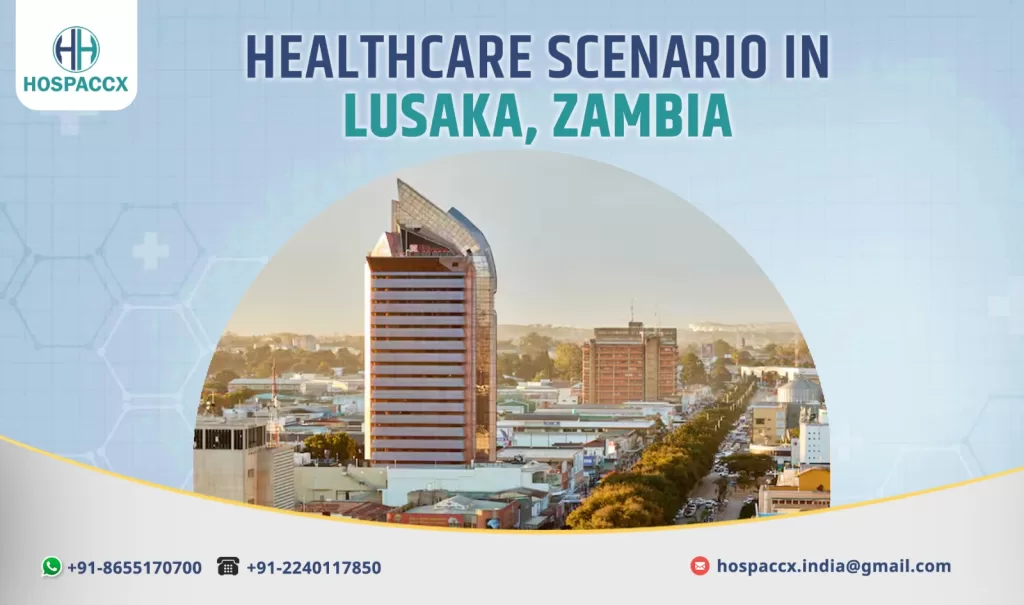
LUSAKA
Introduction
Lusaka, the capital and largest city of Zambia, serves as the country’s political, economic, and healthcare hub. With a rapidly growing population, the demand for accessible and quality healthcare services has significantly increased. The city is home to some of Zambia’s best medical institutions, including tertiary referral hospitals, private healthcare facilities, and specialized diagnostic centers.
Despite advancements in healthcare infrastructure, challenges such as overcrowding, limited resources, and disparities in healthcare access remain prevalent. While public hospitals provide essential services at subsidized rates, private hospitals offer specialized care but remain costly for many citizens. This blog provides an in-depth overview of Lusaka’s healthcare system, its challenges, and a categorized list of medical facilities.
Demographics of Lusaka
| Category | Details |
| Total Population | ~3.3 million (as of 2023) |
| Population Density | ~2,500 people per square kilometer |
| Literacy Rate | ~87% |
| Life Expectancy | ~65 years |
| Infant Mortality Rate (IMR) | ~38 per 1,000 live births |
| Maternal Mortality Rate (MMR) | ~252 per 100,000 live births |
| HIV/AIDS Prevalence Rate | ~12% |
| Malaria Incidence | High (~420 cases per 1,000 population) |
| Access to Clean Water | ~85% of urban residents |
| Major Economic Activities | Trade, services, agriculture, manufacturing |
Healthcare System Overview in Lusaka
Lusaka has a multi-tier healthcare system, comprising public hospitals, private medical facilities, and diagnostic centers.
- Public Healthcare System
- The Ministry of Health (MOH) operates several government hospitals, offering affordable medical care.
- University Teaching Hospital (UTH) is Zambia’s largest public hospital and referral center for specialized treatments.
- Public hospitals provide maternal care, infectious disease treatment, and emergency services, but overcrowding and resource shortages are common issues.
- Private Healthcare Sector
- Private hospitals in Lusaka provide specialized and high-quality healthcare services, often at higher costs.
- Many private institutions cater to expatriates and high-income residents, offering modern medical technology and personalized care.
- Diagnostic Centers
- Lusaka has a growing number of diagnostic centers, providing laboratory tests, imaging services, and advanced screenings.
- These facilities support both public and private hospitals in accurate disease diagnosis and treatment.
Key Challenges in Lusaka’s Healthcare System
Despite improvements, Lusaka’s healthcare sector faces several challenges:
- Overcrowding in Public Hospitals – High patient volumes lead to long waiting times and overburdened healthcare staff.
- Shortage of Medical Supplies—Many public hospitals struggle with limited resources, outdated equipment, and medicine shortages.
- High Costs in Private Facilities – Quality healthcare in private hospitals remains financially inaccessible for many citizens.
- Prevalence of Communicable Diseases—HIV/AIDS, malaria, and tuberculosis remain major health concerns.
- Urban-Rural Disparities – Access to specialized care is better in Lusaka compared to rural areas, leading to inequalities in healthcare access.
List of Hospitals and Diagnostic Centers in Lusaka
Government Hospitals in Lusaka
| Government Hospital |
| University Teaching Hospital (UTH) |
| Levy Mwanawasa University Teaching Hospital |
| Chilenje Level 1 Hospital |
| Matero Level 1 Hospital |
| Kanyama Level 1 Hospital |
| Chipata Level 1 Hospital |
| Chainama Hills Hospital (Mental Health) |
Private Hospitals in Lusaka
| Private Hospital |
| Coptic Hospital |
| Care for Business Medical Centre |
| Fairview Hospital |
| Victoria Hospital |
| Medland Hospital |
| Hilltop Hospital |
| Lusaka Trust Hospital |
Diagnostic Centers in Lusaka
| Diagnostic Center |
| PathCare Zambia |
| Medland Diagnostic Centre |
| Premier Diagnostic Services |
| Lusaka MRI & Diagnostic Centre |
| Coptic Diagnostic Centre |
| Beta Diagnostics |
| Fairview Medical Laboratory |
Conclusion
Lusaka remains Zambia’s healthcare epicenter, offering both public and private medical services. While government hospitals provide essential services, they face capacity and resource limitations. The private sector plays a crucial role in offering specialized care, but its high costs create barriers for many residents.
To improve healthcare accessibility, Zambia must invest in healthcare infrastructure, increase funding for public hospitals, and expand universal health coverage. Strengthening preventive healthcare programs and disease control efforts will be key to ensuring a healthier future for Lusaka’s growing population.