
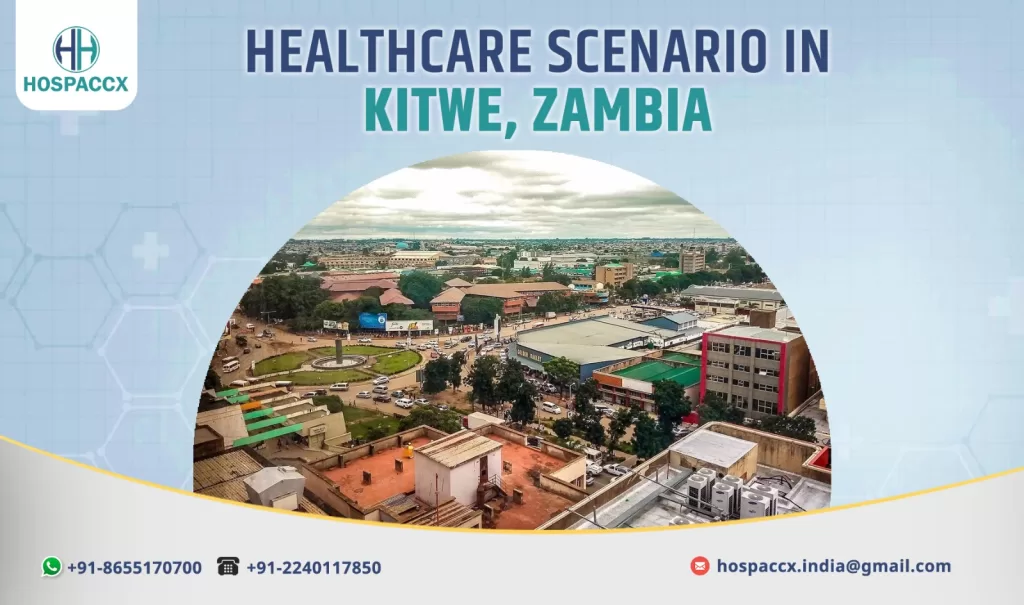
KITWE
Introduction
Kitwe, the second-largest city in Zambia and the economic center of the Copperbelt Province, plays a crucial role in the country’s healthcare system. With a population of over 700,000, the city serves as a medical hub for surrounding towns and rural areas.
Kitwe is home to both public and private healthcare institutions, ranging from government-run referral hospitals to specialized private clinics and diagnostic centers. However, overcrowding, medical staff shortages, and limited access to specialized treatment remain significant challenges. This blog explores Kitwe’s healthcare system, key challenges, and a categorized list of medical facilities.
Demographics of Kitwe
| Category | Details |
| Total Population | ~750,000 (as of 2023) |
| Population Density | ~1,200 people per square kilometer |
| Literacy Rate | ~86% |
| Life Expectancy | ~64 years |
| Infant Mortality Rate (IMR) | ~36 per 1,000 live births |
| Maternal Mortality Rate (MMR) | ~240 per 100,000 live births |
| HIV/AIDS Prevalence Rate | ~12% |
| Malaria Incidence | High (~410 cases per 1,000 population) |
| Access to Clean Water | ~82% of urban residents |
| Major Economic Activities | Mining, manufacturing, trade, agriculture |
Healthcare System Overview in Kitwe
Kitwe’s healthcare system is structured into three primary categories:
- Public Healthcare System
- The Ministry of Health (MOH) manages several government hospitals providing affordable healthcare.
- Kitwe Teaching Hospital (KTH) is one of Zambia’s largest referral hospitals, serving the entire Copperbelt region.
- Government hospitals focus on maternal health, infectious disease treatment, and emergency services but face frequent resource shortages and long waiting times.
- Private Healthcare Sector
- Kitwe has a growing number of private hospitals and clinics offering specialized services, including surgery, cardiology, and diagnostics.
- Private hospitals provide better facilities and shorter wait times but are expensive for many residents.
- Diagnostic and Specialized Centers
- Diagnostic centers in Kitwe provide medical imaging, laboratory services, and advanced testing for diseases such as tuberculosis, HIV, and cancer.
- Many private hospitals have in-house diagnostic services, reducing the need for referrals.
Key Healthcare Challenges in Kitwe
Despite advancements, Kitwe’s healthcare sector faces several challenges, including:
- Overcrowding in Public Hospitals—Government facilities experience long queues and insufficient medical staff, making access to care difficult.
- Shortage of Medical Equipment & Specialists – Limited access to advanced medical equipment and specialized care forces many patients to travel to Lusaka.
- High Prevalence of Communicable Diseases—Malaria, tuberculosis, and HIV/AIDS remain major public health concerns.
- Healthcare Disparities—Access to quality healthcare is limited in peri-urban and low-income areas.
- High Cost of Private Healthcare—Many residents cannot afford private hospitals and diagnostic services, creating a gap in medical access.
List of Healthcare Facilities in Kitwe
Government Hospitals in Kitwe
| Hospital Name |
| Kitwe Teaching Hospital (KTH) |
| Wusakile Mine Hospital |
| Chimwemwe Health Centre |
| Buchi Main Clinic |
| Riverside Health Centre |
| Mindolo 1st Level Hospital |
| Kitwe Central Hospital |
Private Hospitals in Kitwe
| Hospital Name |
| Progress Medical Centre |
| Kitwe South Hospital |
| Coptic Mission Hospital |
| Mary Begg Community Clinic |
| Care for Business Medical Centre |
| Hilltop Hospital |
| Copperbelt Private Hospital |
Diagnostic and Specialized Centers in Kitwe
| Diagnostic Center Name |
| Lancet Laboratories Zambia (Kitwe) |
| Kitwe Imaging & Diagnostic Centre |
| MRI & CT Scan Centre |
| Copperbelt Pathology Services |
| Wellcare Medical Laboratory |
| Healthlink Zambia Diagnostic Clinic |
Conclusion
Kitwe’s healthcare sector continues to evolve and expand, with both public and private institutions playing a crucial role in serving the population. While public hospitals provide essential care, they often struggle with overcrowding and limited resources. Meanwhile, private healthcare facilities offer advanced treatments, but cost remains a barrier for many residents.
To improve healthcare access in Kitwe, the government must invest in infrastructure, medical personnel, and technology, while also enhancing partnerships with private healthcare providers. With strategic reforms and continued investment, Kitwe can become a model city for healthcare excellence in Zambia.