
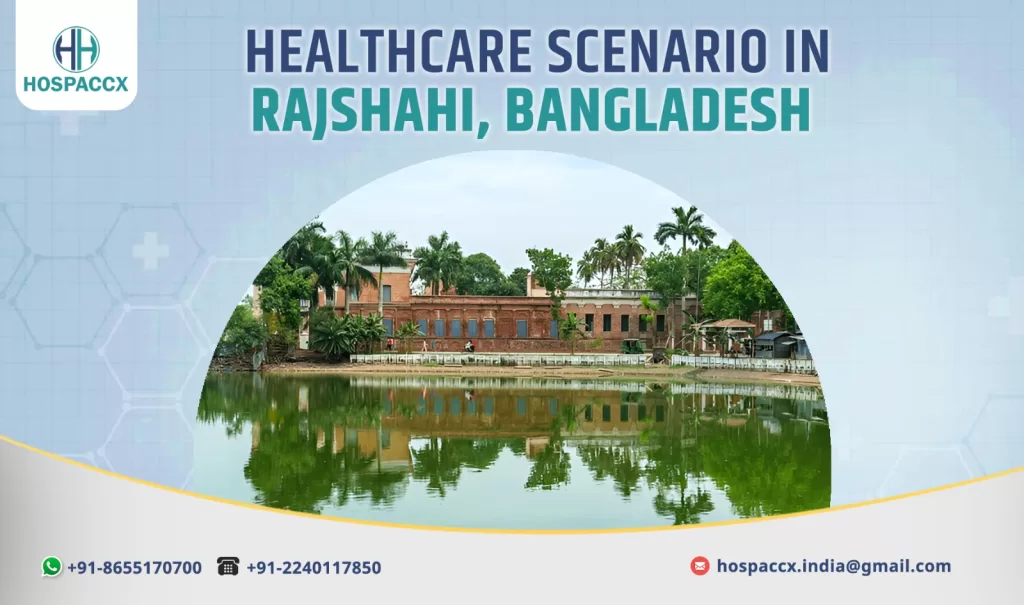
RAJSHAHI
Introduction
Rajshahi, known as the “Silk City” of Bangladesh, is a key urban center in the northwestern part of the country. The city is renowned for its educational institutions, historical significance, and agricultural contributions, particularly in mango production. Over the years, Rajshahi has seen significant improvements in healthcare infrastructure, but challenges such as a shortage of specialized healthcare professionals, limited advanced medical facilities, and an increasing burden of non-communicable diseases (NCDs) persist.
This blog explores Rajshahi’s healthcare system, its demographics, challenges, and the key hospitals providing medical services.
Demographics of Rajshahi
| Category | Details |
| Total Population | ~900,000 (urban area) |
| Population Density | ~1,300 people per square kilometer |
| Literacy Rate | ~73% |
| Life Expectancy | ~72 years |
| Infant Mortality Rate (IMR) | 30 per 1,000 live births |
| Prevalence of NCDs | ~58% of total disease burden |
| Common Communicable Diseases | Dengue, tuberculosis, diarrheal diseases |
| Air Pollution Impact | Respiratory diseases affect ~10% of the population |
| Major Economic Activities | Agriculture, education, trade |
Healthcare System Overview in Rajshahi
Rajshahi’s healthcare system is a mix of government-run facilities, private hospitals, and diagnostic centers. The city has Rajshahi Medical College Hospital (RMCH), which serves as the largest government healthcare facility for the region. However, access to advanced healthcare services remains limited compared to Dhaka or Chattogram.
- Public Healthcare System
- Rajshahi Medical College Hospital (RMCH) is the primary public hospital, providing specialized and emergency medical care.
- Several upazila health complexes and community clinics cater to rural populations.
- Government hospitals often suffer from overcrowding, shortages of medical supplies, and limited specialized care.
- Private Healthcare System
- Private hospitals and diagnostic centers have been growing in Rajshahi, providing better service quality and specialized treatments.
- While private hospitals offer modern medical facilities, they are often expensive for lower-income groups.
- Specialized Healthcare Services
- Rajshahi is lacking in specialized hospitals for cardiology, oncology, and nephrology.
- Cancer and dialysis treatment facilities remain limited, forcing patients to travel to Dhaka.
- Telemedicine services are emerging to connect rural patients with specialists.
Key Healthcare Challenges in Rajshahi
- Shortage of Healthcare Infrastructure
- Government hospitals are overcrowded and understaffed.
- Limited access to ICU and emergency care for critical patients.
- Shortage of Specialists and Trained Medical Professionals
- Many specialists prefer working in Dhaka or Chattogram, leaving Rajshahi with fewer expert doctors.
- The doctor-to-patient ratio is lower than the national average.
- Rising Burden of Non-Communicable Diseases (NCDs)
- Hypertension, diabetes, and heart diseases account for over 58% of hospital admissions.
- Poor dietary habits and lack of physical activity are contributing factors.
- Prevalence of Communicable Diseases
- Dengue, tuberculosis, and waterborne diseases remain a challenge, especially in densely populated areas.
- Seasonal outbreaks of diarrheal diseases occur due to unsafe drinking water.
List of Government and Private Hospitals in Rajshahi
| Government Hospitals |
| Rajshahi Medical College Hospital (RMCH) |
| Rajshahi Chest Disease Hospital |
| Rajshahi Shishu Hospital |
| Rajshahi Eye Hospital |
| Rajshahi Railway General Hospital |
| Upazila Health Complexes |
| Rajshahi Infectious Disease Hospital |
| Private Hospitals |
| Islami Bank Medical College and Hospital |
| Christian Mission Hospital, Rajshahi |
| Rajshahi Royal Hospital |
| Rajshahi Lab Aid Hospital |
| Mother Care Hospital and Diagnostic Center |
| Al-Falah Medical Center |
| Popular Diagnostic Center Rajshahi |
| New Rajshahi Hospital and Diagnostic Center |
| Care Diagnostic and Consultation Center |
| Rajshahi Metropolitan Hospital |
Conclusion
Rajshahi has made significant progress in improving healthcare accessibility, but infrastructure limitations, shortage of specialists, and increasing disease burdens remain key challenges. While private hospitals are expanding, high treatment costs prevent equitable access to quality healthcare. Strengthening government healthcare facilities, expanding specialized medical services, and investing in telemedicine can help bridge the gap in Rajshahi’s healthcare system.
With the right policy interventions and healthcare investments, Rajshahi can become a model city for affordable and accessible healthcare in northwestern Bangladesh.