
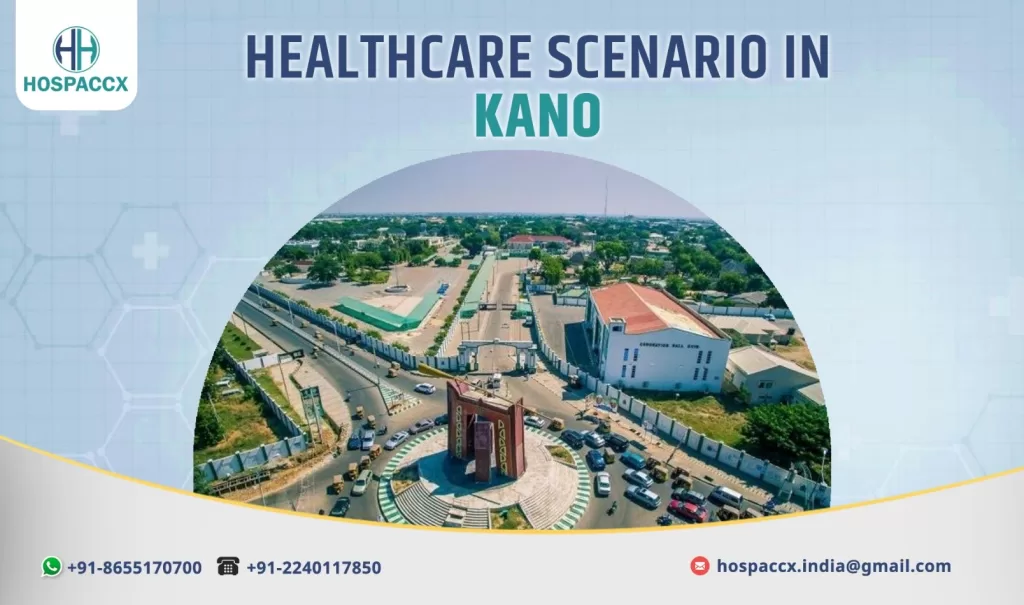
Kano State faces a complex healthcare landscape, where a shortage of qualified Human Resources for Health (HRH) intersects with funding challenges at the Primary Healthcare (PHC) level. While the state has demonstrated commitment through initiatives like allocating up to 15% of its budget to health and implementing innovative funding mechanisms such as the BHCPF and KSCHMA, significant gaps remain. Only a fraction of Kano’s primary healthcare workforce possesses formal qualifications in key areas like nursing and midwifery, impacting service quality. The BHCPF and KSCHMA support hundreds of PHCs through capitation funding, yet effective resource management is a persistent issue. To address these challenges, the state is implementing the Minimum Service Package (MSP) to improve resource mobilization and management skills. Success also hinges on strategies to promote community-based health insurance, bridge skills gaps through task-shifting policies, engage private sector models, digitalise processes for more effective management and accountability, and better retain HRH in rural and under-served communities.
- Kano’s Healthcare
- Kano as a Focal Point: Kano State is a critical location for addressing Human Resources for Health (HRH) and health financing issues at the Primary Healthcare (PHC) level.
- Challenges in Training & Qualification: The state faces significant challenges regarding the training and qualifications of its health workforce. Many PHCs struggle with poorly trained personnel.
- HRH Statistics: Out of over 19,000 primary healthcare workers in Kano State, only about 3,500 possess qualifications in nursing, midwifery, community health extension, or pharmacy.
- Impact on Service Quality: The lack of qualified HRH negatively impacts the quality of services provided at PHCs.
- BHCPF & KSCHMA: The Basic Health Care Provision Fund (BHCPF) and the Kano State Contributory Health Care Management Agency (KSCHMA) are crucial funding mechanisms.
- Number of PHCs Supported: These funding mechanisms support 381 PHCs in Kano State.
- Use of Capitation: These PHCs use capitation funding to refurbish infrastructure, procure essential medicines, and hire additional healthcare workers.
- Resource Management Challenges: Effective management of available resources remains a significant challenge.
- Minimum Service Package (MSP): The implementation of the Minimum Service Package (MSP) since 2019 aims to improve resource mobilization and management skills.
- MSP Impact: Currently, 46 PHCs benefit from the MSP, resulting in improved staffing and infrastructure.
- Community-Based Health Insurance: Community-Based Health Insurance Schemes (CBHIS) can improve equitable access to healthcare, especially for those in the informal sector.
- Task Shifting: Addressing HRH skills gaps requires leveraging existing Task Shifting and Task Sharing policies.
- Private Sector Engagement: Leveraging private sector models is essential for health financing and improving PHC service delivery.
- Health Security Legislation: Kano is the first state in Nigeria to adopt comprehensive subnational health security legislation.
- Health Insurance for Vulnerable Populations: The state government has prioritized health system strengthening to reduce out-of-pocket expenses. KSCHMA subsidizes health services to ensure residents have access to quality care, especially for maternal, newborn, and child health
- Disease Burden and Key Healthcare Insights
Kano State faces a number of significant health challenges.
Infectious Diseases:
- Cholera: Cholera is endemic in Kano State, with yearly outbreaks and a case fatality rate of 3.3% between 2010 and 2019. From 2010 to 2019, Kano State reported 18,483 cases and 617 deaths, with a disproportionate number of cases and deaths (67.7% and 72%, respectively) occurring in rural wards. Case fatality ratios were statistically higher in children under 5 years old compared to those older than 14.
- Polyparasitism: A 2019 study found that polyparasitism is highly prevalent among rural communities in Kano State. Overall, 84.0% of participants were infected with at least one parasite species, and 51.2% had multiple parasitic infections. The most prevalent parasites were Plasmodium falciparum (60.6%), followed by Blastocystis sp. (29.2%) and hookworm (15.4%).
Non-Communicable Diseases:
- Cancer: Reports of cancer prevalence in Nigeria are scarce and primarily hospital-based, due to a lack of cancer registries. A review of the Kano cancer registry from 1995-2004 documented 1,990 cancer cases, indicating an increasing trend, particularly from 1999-2004.
- Key Healthcare Insights:
- A study shows the epidemiology of cholera in Kano State differs between urban and rural settings and that hotspot maps at the ward level are best suited for targeting interventions including vaccines. Interventions should focus on the identified micro-hotspots for cholera elimination from Kano State.
- Polyparasitism is highly prevalent among rural communities in Kano State, and effective, sustainable, and integrated control measures should be implemented to reduce the burden and consequences of these infections.
- Between 1998 and 2019, life expectancy increased in Nigeria to 64.3 years.
- Nigeria had the fourth-highest under-five mortality rate for male individuals.
- Hospitals and Diagnostic Centers in Lagos
| Government Hospital |
| Aminu Kano Teaching Hospital |
| Infectious Disease Hospital |
| General Hospital Bichi |
| General Hospital Dambatta |
| General Hospital Dawakin Tofa |
| Abubakar Imam Urology Centre |
| General Hospital Gwarzo |
| General Hospital Wudil |
| Muhammad Abdullahi Wase Teaching Hospital |
| Murtala Muhammad Specialist Hospital |
| National Orthopaedic Hospital, Dala |
| Private Hospital |
| Aurora Specialist Hospital |
| Makkah Specialist Eye Hospital |
| Warshu Hospital |
| UMC Zhahir Hospital |
| Al-Noury Specialist Hospital |
| Amina Specialist Hospital |
| Pinnacle Specialist Hospital |
| Khadijat Memorial Hospital |
| Ivory Clinic |
| Premier Clinic |
| Diagnostic Centre |
| Nigerian Airforce Medical Centre |
| Getwell Women and Children Hospital |
| Nol International Hospital & Diagnostic Centre |